
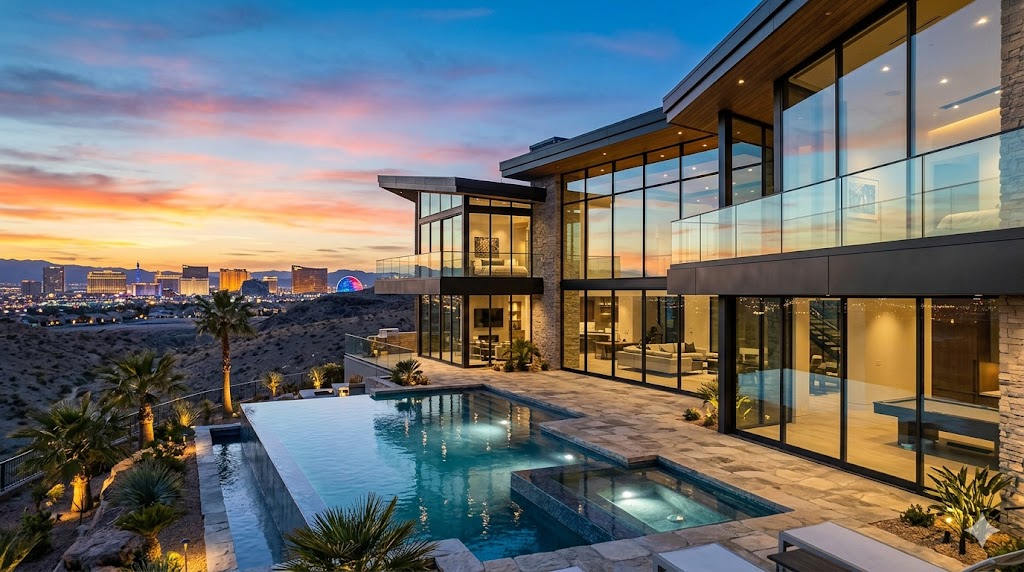
There's a category of home improvement that sits apart from everything else — not paint colors, not countertops, not even landscaping. When you change the glass on the exterior of a Las Vegas home, you change the entire experience of living there. Natural light shifts. Views open up. The line between inside and outside softens or disappears completely.
Custom exterior glass is also one of the most consequential investments a homeowner can make in this market, because the desert doesn't forgive poor specifications. A sliding door system that works fine in coastal California may fail prematurely in Las Vegas. A window that looks right in a showroom may create a solar heat problem that runs up energy bills every summer for the life of the home. Getting custom exterior glass right requires understanding what "custom" actually means in a Mojave Desert context — and why it demands more than what standard residential products deliver.
This guide covers everything Las Vegas homeowners need to know: the options available, how to think about performance in an extreme climate, what questions to ask before committing to a glass system, and how to make sure what you buy actually matches the vision you have for your home.
What "Custom Exterior Glass" Actually Means
The word "custom" gets used loosely in the home improvement industry. For exterior glass, it means something specific.
Off-the-shelf windows and patio doors come in standard sizes and configurations. You pick from a catalog, the product ships from a warehouse, and an installer drops it in an opening that was framed to match. The result is functional, but it's constrained by whatever dimensions and configurations the manufacturer decided to stock.
Custom exterior glass starts from the other direction. You begin with the opening, the view, the architectural intent, and the performance requirements — and the glass system is engineered to meet them. Panel sizes are built to specification. Frame profiles are selected for the visual look and thermal performance required. Glass compositions are chosen based on orientation, exposure, and how the space will be used.
In Las Vegas luxury residential construction, custom glass is how you get the 12-foot sliding panel that opens an entire great room wall to the pool deck. It's how you achieve a frameless corner window that wraps around a view without an interrupting vertical post. It's how a pivot entry door becomes a design statement rather than just a way into the house.
Custom also means the product is specified for where it's actually going — not optimized for an average climate and dropped into one of the most extreme thermal environments in the country.
The Las Vegas Climate Problem That Most Homeowners Don't Plan For
Las Vegas sits at roughly 2,000 feet elevation in the Mojave Desert. Summer highs regularly exceed 110 degrees Fahrenheit. West-facing glass surfaces can reach 160 degrees during peak afternoon hours. Winter nights drop into the 30s and occasionally below freezing. That temperature swing — potentially 80 degrees or more between a summer afternoon and a winter night — creates thermal cycling stress that compounds over years.
UV radiation is another factor unique to this region. Las Vegas receives among the highest UV index readings in the continental United States. Standard glass, even tinted glass, allows significant UV transmission. Over two to three years, that translates into faded flooring, bleached upholstery, and sun-damaged artwork — all visible reminders that the glass wasn't specified correctly for this environment.
Then there's wind. The Las Vegas Valley experiences seasonal gusts that regularly hit 50 to 60 miles per hour. Large exterior glass panels act like sails. Every square foot of glass area adds to the wind load the system needs to withstand. Panel-to-frame connection, anchorage into the structural opening, and glass thickness all have to be engineered with wind resistance as a primary criterion — not an afterthought.
High-performance custom glass addresses all three of these variables simultaneously. Standard residential glass addresses none of them adequately.
The Categories of Custom Exterior Glass for Las Vegas Homes
Custom exterior glass isn't one product — it's a family of systems, each suited to specific applications and design goals.
Custom Window Systems
The entry point for most homeowners thinking about custom exterior glass is windows. What separates custom window systems from standard residential windows isn't just size — it's the combination of frame engineering, glass specification, and configuration flexibility.
In Las Vegas custom homes, oversized fixed windows are commonly used on walls where the goal is maximum view and light without the operational complexity of an opening sash. A fixed panel can span greater dimensions with a cleaner aesthetic than a comparable operable window. For architectural glass walls — a series of vertically oriented panels that read as a single composition — fixed systems are often the right choice.
Where ventilation matters, casement and awning windows offer a tight seal when closed (important for energy performance in extreme heat) while opening fully for airflow during the shoulder seasons. Thermally broken aluminum frames from manufacturers like International Window and WeatherShield keep heat from conducting through the metal, which matters enormously when the outside frame is absorbing direct desert sun.
Multi-Panel Sliding Glass Doors
The defining feature of desert modern architecture is the connection between interior living space and outdoor environment. Multi-panel sliding glass doors — also called multi-slide or pocket slide systems — are the primary way that connection is achieved.
A standard patio door gives you a four-foot or six-foot opening. A multi-panel sliding system using three, four, or five panels can open an entire wall — 16 feet, 20 feet, even wider — allowing the living room or great room to flow directly into the patio, pool deck, or outdoor kitchen. When the panels stack into a pocket or at one end of the opening, the glass disappears entirely and the two spaces become one.
The engineering behind these systems matters. Panels need to glide smoothly despite weighing hundreds of pounds each. Bottom rollers and top guides need to perform reliably through thousands of open-close cycles in an environment where dust, heat, and thermal expansion are constant factors. Fleetwood door systems are among the most specified in Las Vegas luxury construction for exactly this reason.
Pivot Doors
A pivot door operates on a rotating hinge mechanism rather than side-mounted hinges, allowing for panels that are dramatically larger and heavier than a conventional entry door could support. In Las Vegas luxury homes, pivot doors have become a signature architectural element — a 10-foot or 12-foot glass pivot entry communicates a level of design intention that sets a custom home apart from the moment you approach it.
The pivot mechanism allows for precise, balanced operation even at scale. A well-engineered pivot door that weighs 500 pounds should swing with the same ease as a standard residential door. For a deeper look at how pivot doors compare to sliding systems, see our guide on pivot doors vs. sliding glass doors.
Frameless Glass Enclosures and Windscreens
Outdoor living in Las Vegas is nearly year-round, but the spring wind season makes unprotected patios genuinely unpleasant for several months. Frameless glass windscreen panels — either fixed or operable — protect outdoor entertaining areas from wind without blocking light or views. A glass windscreen along the west edge of a pool deck turns an unusable spring afternoon into a comfortable one while maintaining the visual openness that makes desert outdoor living appealing in the first place.
Glass enclosures around outdoor kitchens or dining areas extend the usable season further and provide a level of privacy from adjacent properties without the visual weight of a solid wall. Frameless construction keeps these enclosures feeling light and architectural rather than makeshift or industrial.
Performance Specifications That Matter in This Climate
When evaluating custom exterior glass for a Las Vegas home, the performance data matters as much as the aesthetics. Three numbers drive most of the important decisions.
Solar Heat Gain Coefficient (SHGC) measures how much solar radiation passes through the glass as heat. The scale runs from 0 to 1 — lower numbers mean less heat entering the interior. For south- and west-facing glass in Las Vegas, a low SHGC (typically 0.25 or below) is the specification you want. It directly affects summer cooling loads and the long-term comfort of your interior spaces.
U-Factor measures the overall insulating performance of the glass unit — how quickly heat transfers through the assembly in either direction. Lower U-factors mean better insulation. In a climate with extreme summer highs and real winter lows, a well-insulated glass unit does double duty: reducing summer heat gain and preventing winter heat loss. Our guide on energy-saving windows covers this in detail.
Visible Light Transmittance (VLT) measures how much natural light the glass allows through. High-performance Low-E glass can achieve strong solar control without making your interior feel dark — but the balance between SHGC and VLT requires careful specification. A glass supplier who just recommends the darkest coating available isn't doing you any favors. The goal is maximum daylight with minimum heat transfer.
Beyond these three numbers, glass type matters. Laminated glass — two panes bonded with an interlayer — offers superior UV filtering, sound reduction, and security compared to standard tempered glass. For ground-floor exterior applications in a Las Vegas custom home, laminated glass is often the right call even where code only requires tempered.
How to Plan a Custom Exterior Glass Project
The biggest mistake Las Vegas homeowners make with custom exterior glass is treating it as a late-stage decision. It isn't. The choices made about glass during the design phase determine structural requirements, construction sequencing, energy performance, and the final visual character of the home. Walking back those decisions after framing is complete is expensive and limiting.
Start with intent, not product. Before you look at any specific glass systems, get clear on what you're trying to achieve. Are you opening a living room wall to the patio? Creating a dramatic entry statement? Preserving a mountain view while blocking afternoon sun? The intent drives the specification — not the other way around.
Involve a glass specialist during design. An architect can sketch a glass wall. A glass specialist can tell you whether that wall is feasible, what it will cost, how it will perform, and what structural accommodations it requires. These are different disciplines. The most successful custom glass projects involve both parties in conversation with each other from early in the design process.
Understand lead times. Custom glass systems are not stock products. Depending on the manufacturer and configuration, lead times can run 8 to 16 weeks from order to delivery. On a custom home build, that means the glass order needs to be placed months before the installation date — which means the specification needs to be finalized well ahead of when most homeowners think to engage a glass company.
Think about the whole exterior, not just one element. Custom exterior glass has the most visual impact when it's treated as a cohesive system — windows, entry doors, patio doors, and railings that share a frame profile, finish color, and design language. Mixing manufacturers and product lines can create a disjointed result that undermines the overall architectural intent.
Why Choosing the Right Glass Partner Matters More Than Choosing the Right Product
The quality of the installation is inseparable from the quality of the product. A premium glass system improperly installed — misaligned frames, poor sealing, incorrect anchorage — will perform like a mid-grade product. And in a climate as demanding as Las Vegas, performance gaps compound quickly.
A glass specialist who works exclusively in the residential custom market understands the products deeply, has established relationships with the manufacturers, and brings installation experience that a general glazier simply doesn't have. They know which configurations hold up over time in desert conditions, which frame finishes resist UV degradation, and how to sequence installation on a custom build so that oversized panels are set before the construction timeline gets complicated.
At Desert Luxury, custom exterior glass for Las Vegas homes is what we do. We work with Fleetwood, International Window, WeatherShield, and other premium manufacturers to specify and install glass systems that perform beautifully in this climate for the long term. Whether you're building new, remodeling, or replacing aging glass that wasn't built for desert conditions, our team brings the product knowledge and installation expertise your project needs. Contact us to start the conversation.